Happy new year! This post is less about management, and more about why I wanted to become a manager. Then I’ll go into some of my goals for 2025 and beyond.
Early views on management
If you’ve found this post through my About Me page, I really wasn’t kidding when I said it all started when I was 15. Throughout my childhood, my mother usually worked 2 jobs. She would tell my sister and I “When you grow up, you should always have a job. Even if it’s a bad one.”
I got my first job as a cashier at a pharmacy and I hated it 90% of the time. The managers were mean and didn’t collaborate. For the most part they were more interested in exercising control than actually leading. There was one exception.
They may forget what you said – but they will never forget how you made them feel.
This job was almost 18 years ago, so I really don’t remember anything about his management style other than the fact that he didn’t yell, and he made an otherwise bad job not suck. At some point I thought to myself “if I become a manager, I’ll be just like him.” I remember feeling devastated when I found out he was leaving to become a management trainer. I quit pretty fast after he left.
When I was 17 I worked as a cashier for an office supply company. The managers were all much better communicators and would work with you to solve problems. Unlike my first job, not every event felt like a fire that needed to be put out immediately. The work was the same, but it was a lot less stressful and it didn’t suck. Through my time working there, I gained an appreciation for leadership as a problem solving function, and not just micromanagement.
Undergrad
For my undergrad degree, I studied immunology and infection. I chose my major because I thought it sounded cool. I made that choice with about 5 seconds of thought. I didn’t get involved in any clubs or extracurriculars, and I didn’t build up a network.
One summer, I was applying for a lab assistant position with a local biotech company. I made the mistake of telling them that “I didn’t want to be in a lab for the rest of my life.” To be honest, that probably cost me the job. The only other thing that stood out in that interview was the founder asking me “How do you deal with assholes in the workplace?” I was so caught off guard, but I think that interview is what taught me that professionalism is a lie. I knew that I definitely wanted to work somewhere where people could be that casual and authentic.
In my final year of undergrad, I went to the university career fair. I talked with some people at a laboratory testing company, and asked them “So what kind of opportunity for advancement is there?” And they just looked at each other in silence. The only other person I talked to was from another university talking about their pharmacy program. Just like my undergrad, I chose to apply to the pharmacy program on an impulse. I was accepted into the program, but I deferred my acceptance by a year so that I could get the money together to pay for tuition.
Between undergrad and studying pharmacy, I worked as a lab assistant. Working as a lab assistant taught me about the value of networking and how much I enjoy deep work.
Pharmacy
When I started studying pharmacy in the UK, I had a bit of a leg up on other students because I already had a bachelors degree. In the UK, pharmacy is a program you can go straight into after high school. I was getting a lot of questions from other students about assignments from stoichiometry to how to write a lab report. Explaining these concepts one on one was really rewarding, but it was taking up a lot of time, and there were always more questions. In my second year I went to my professors and asked them to book a lecture hall for me. I messaged everyone in my year of pharmacy and said I would explain one of our major assignments in a workshop. 70 students showed up and I did a deep dive explaining the whole assignment in half an hour. Later that year, some friends and I gave another lecture on pharmaceutical compounding and 78 students showed up.
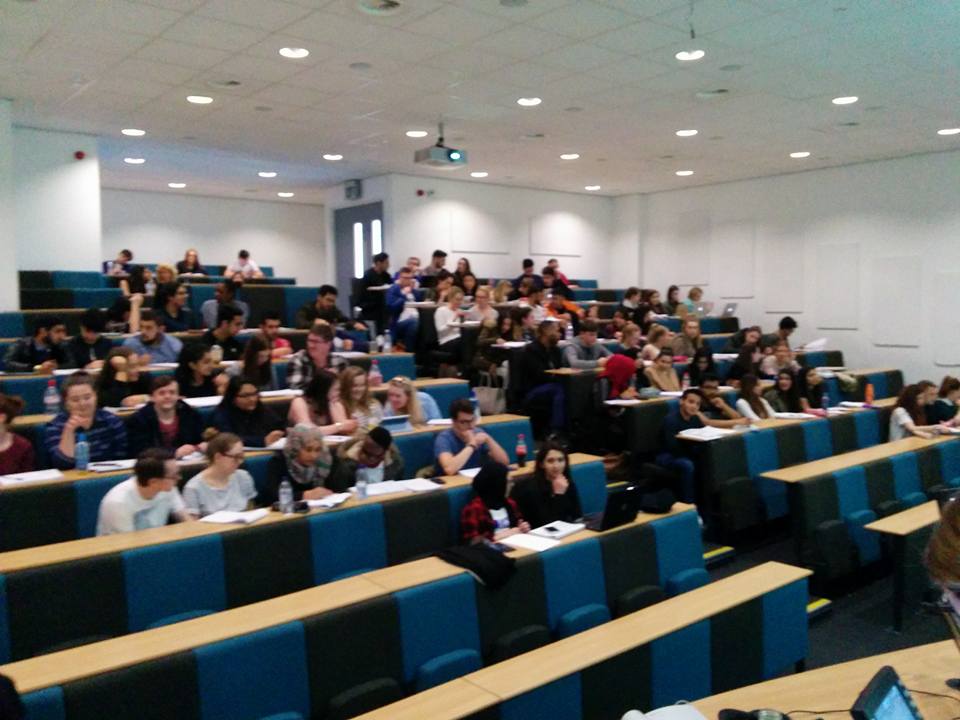
For the pharmaceutical calculations assessment, we taught students the calculations, and the ones that failed the first attempt did 10-30% better on the second attempt. We were so successful that the professors met with us because the improvement was suspiciously higher than they expected. My tutoring experience gave me a better appreciation for advocating for my team.
I also really got into volunteering for things like the student’s union, NICE, and laboratory assistant work. Every time we had a guest lecturer, I would follow up with an email and try to meet with them for coffee. Tutoring and volunteering made me realize how easy it can be to scale impact if you just ask.
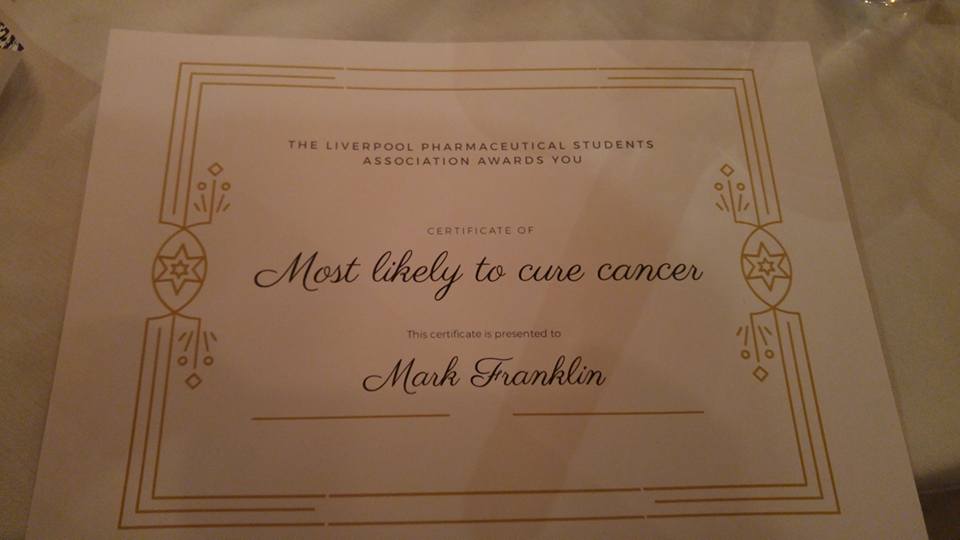
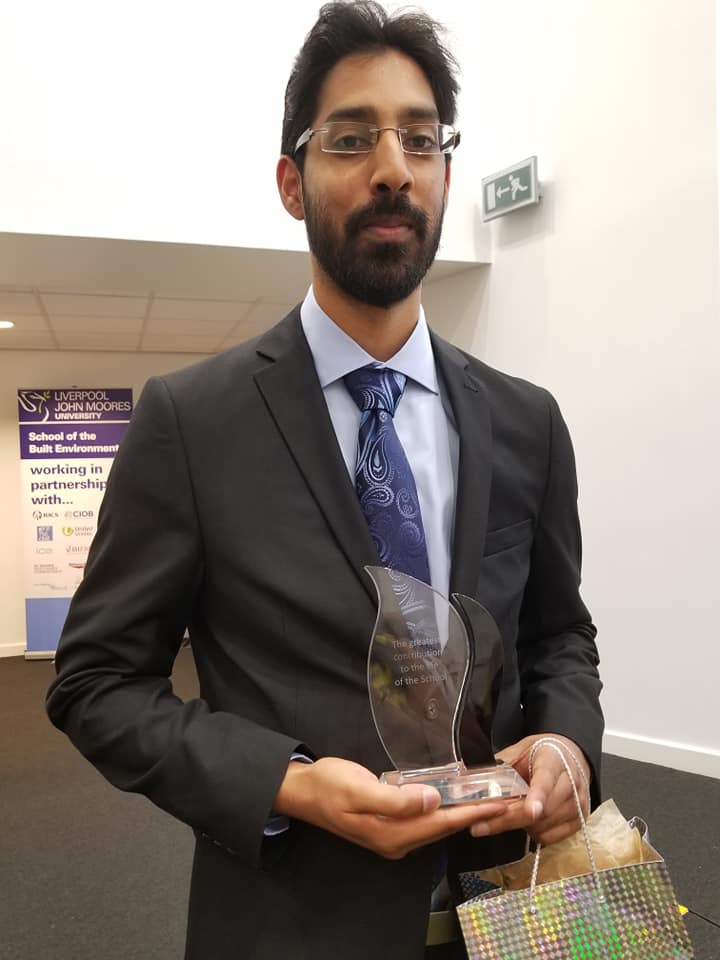
For all the work I did during pharmacy school, my class awarded me “Most likely to cure cancer”, and the school gave me an award for the “greatest contribution to the life of the school of pharmacy”. Not bad for a guy who realized he didn’t actually want to be a pharmacist 3/4 of the way through the program.
Being awarded “Most likely to cure cancer” by the other students will always be one of my greatest achievements. But it means that I need to keep scaling my impact.
Career
I knew that I wanted to grow quickly before I even started working. At one point a couple of months into working, we had conversations about career growth, and I said to my boss that I eventually wanted to move into a leadership role. By saying it out loud I made an Active Commitment to myself. I started reading a lot of business books to learn more about the management side of things. By laying the foundation early and committing, I was ready when the opportunity presented itself.
Through my time in this role, I’ve been proud to have people on my team say things like
This is the best team I’ve ever worked with!
Or
I don’t get the Sunday Scaries anymore!
Tl;dr
- Make work “not suck” for more people
- Leadership should solve problems for their teams
- Stop pushing “professionalism” as a value
- Networking for career progression
- Enabling deep work
- Advocating for my team
- Having a bigger impact is easy if you just ask
Options for scaling from here
So at this point, what’s next? It’s time to actively commit to more goals to keep scaling my impact.
This year
At work, I’ll continue to enable and unlock more growth for the company, to get to a point where I can hire more people into the work environment we’ve worked so hard to create, train more managers, and eventually send them out to other companies to improve work culture more broadly.
I’ll keep a consistent schedule for the blog to grow an audience that resonates with my management style.
Long term
The experience and network that I build now, will help propel me to larger impact goals for the future. Eventually, I’d like to be at a point where I can be an advisor for startups and a leadership coach, to enable more growth and impact.
What about you?
What are your goals for 2025 and beyond? Are you ready to actively commit to them? Let me know in the comments!
 I manage
Leave a reply to Career Conversations – I manage Cancel reply